"TO THE FINDER... THE ISLE OF KOHOLINT, IS BUT AN ILLUSION... HUMAN, MONSTER, SEA, SKY... A SCENE ON THE LID OF A SLEEPER'S EYE... AWAKE THE DREAMER, AND KOHOLINT WILL VANISH MUCH LIKE A BUBBLE ON A NEEDLE... CASTAWAY, YOU SHOULD KNOW THE TRUTH!”
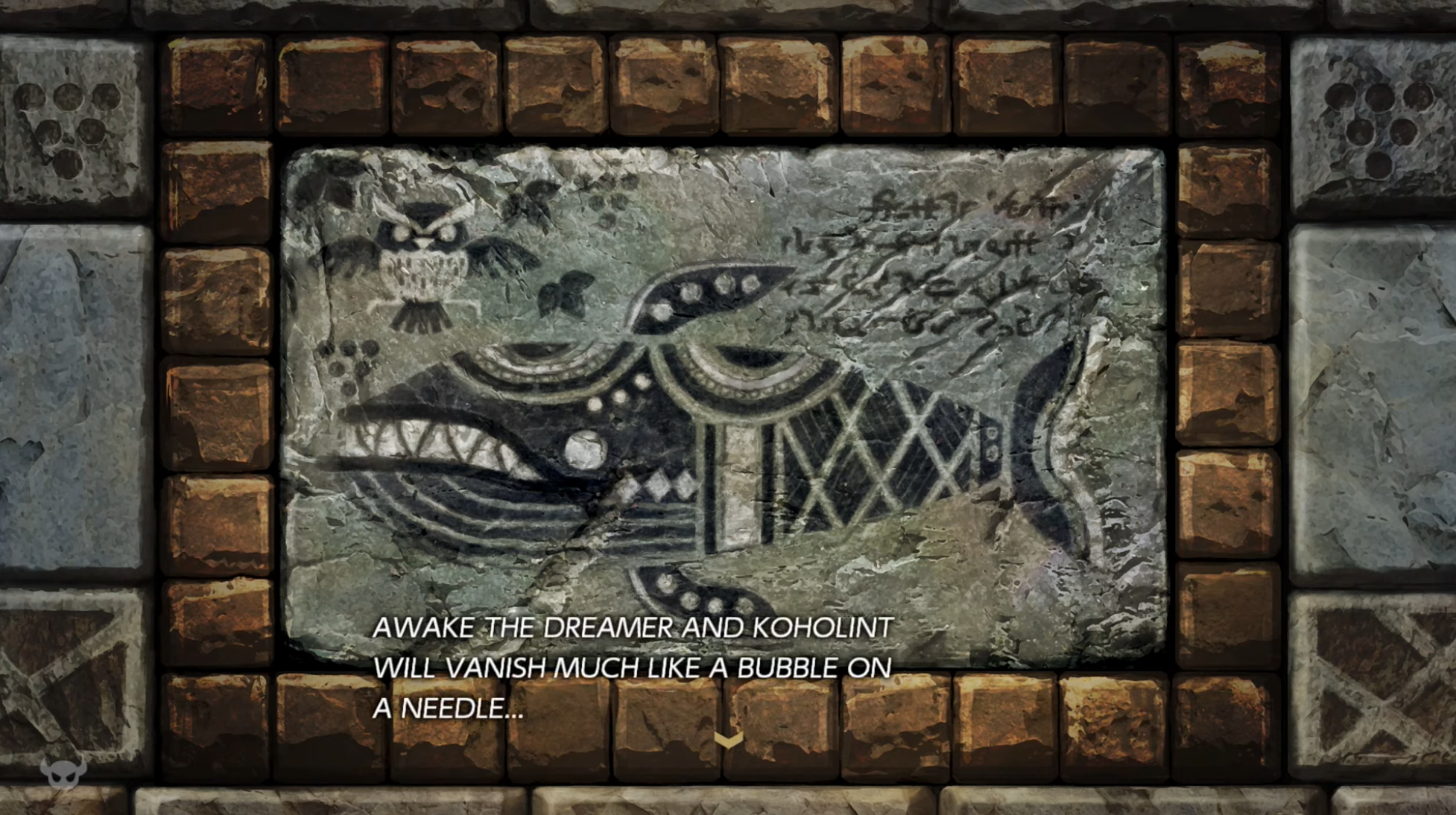
The Dreamscape of Koholint
Koholint is a physical realm created by the dream of the Wind Fish. This physical realm overlaps with Hyrule and becomes part of its world during the duration of the dream. While slumbering, the Wind Fish is able to subconsciously manifest parts of its spirit as avatars within the dream. We see this manifest as the owl that guides Link through his journey.
Within this world, objects of power were also created that had some control over the world itself. In Koholint, these are the Instruments of the Sirens. These objects are important to controlling Koholint itself and the Nightmare deliberately tries to protect these from Link’s grasp.
Without outside interference from the Nightmare, the Wind Fish would eventually wake up and cause Koholint to disappear. With the intrusion of the Nightmare, the Wind Fish’s dream becomes a perpetual nightmare.
The Nightmare’s Plot
Recognizing that Koholint was a real place and that it was a product of the Wind Fish’s dream, the Nightmare took advantage of the situation and injected itself into the Wind Fish, corrupting it and the dream it produced. With some control over the Wind Fish, the Nightmare is able to ensure it cannot wake and as a result Koholint becomes partially the Nightmare’s domain.
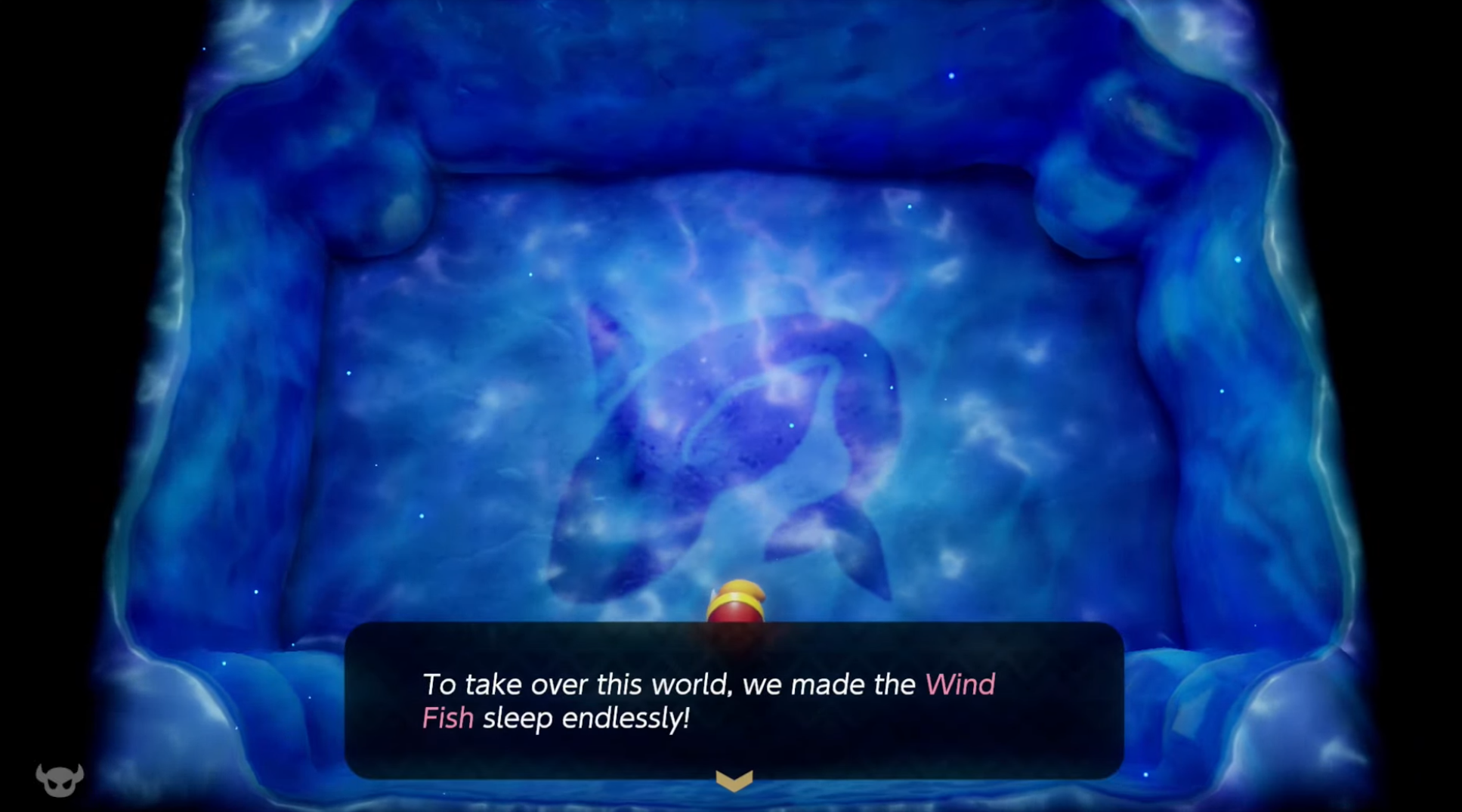
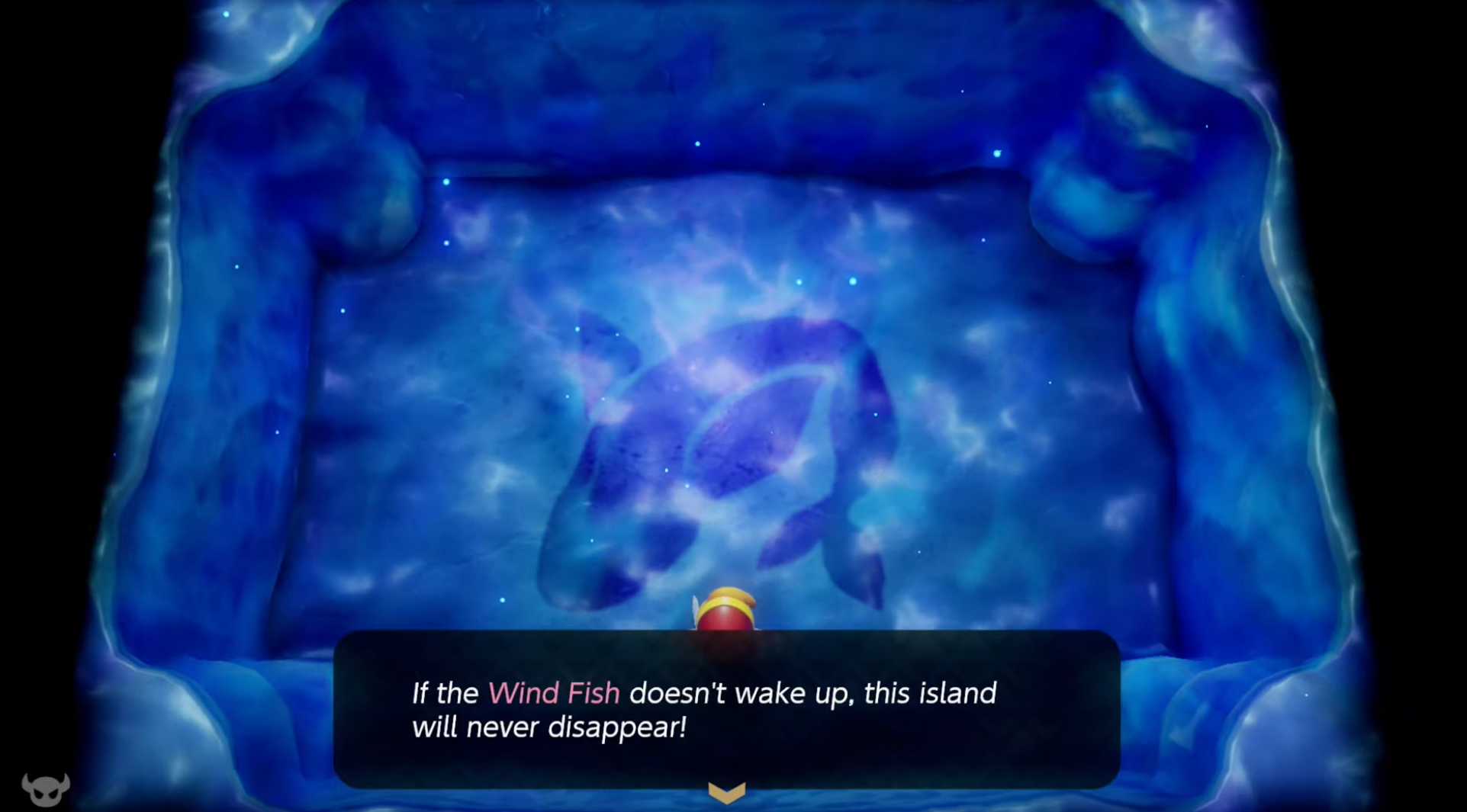
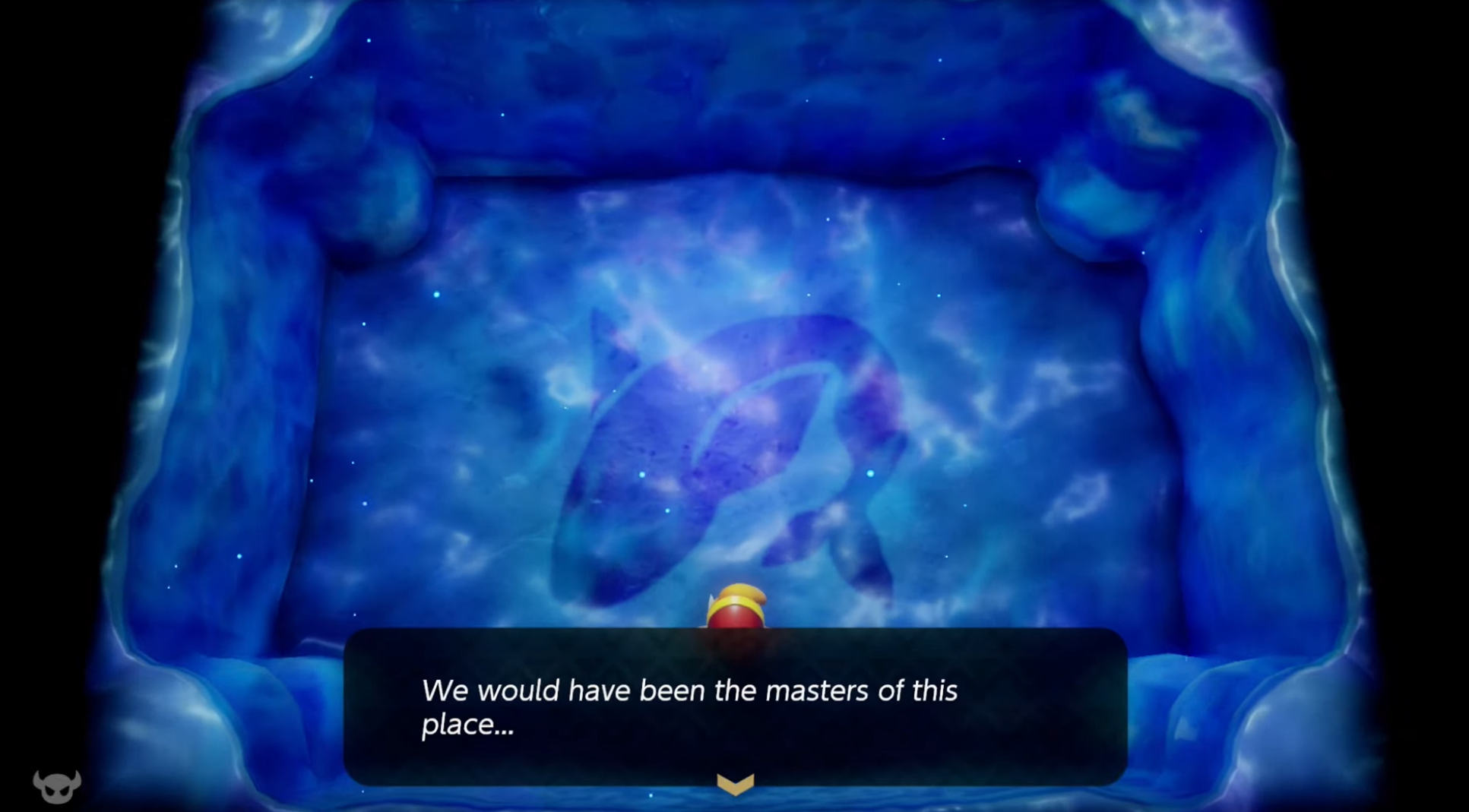
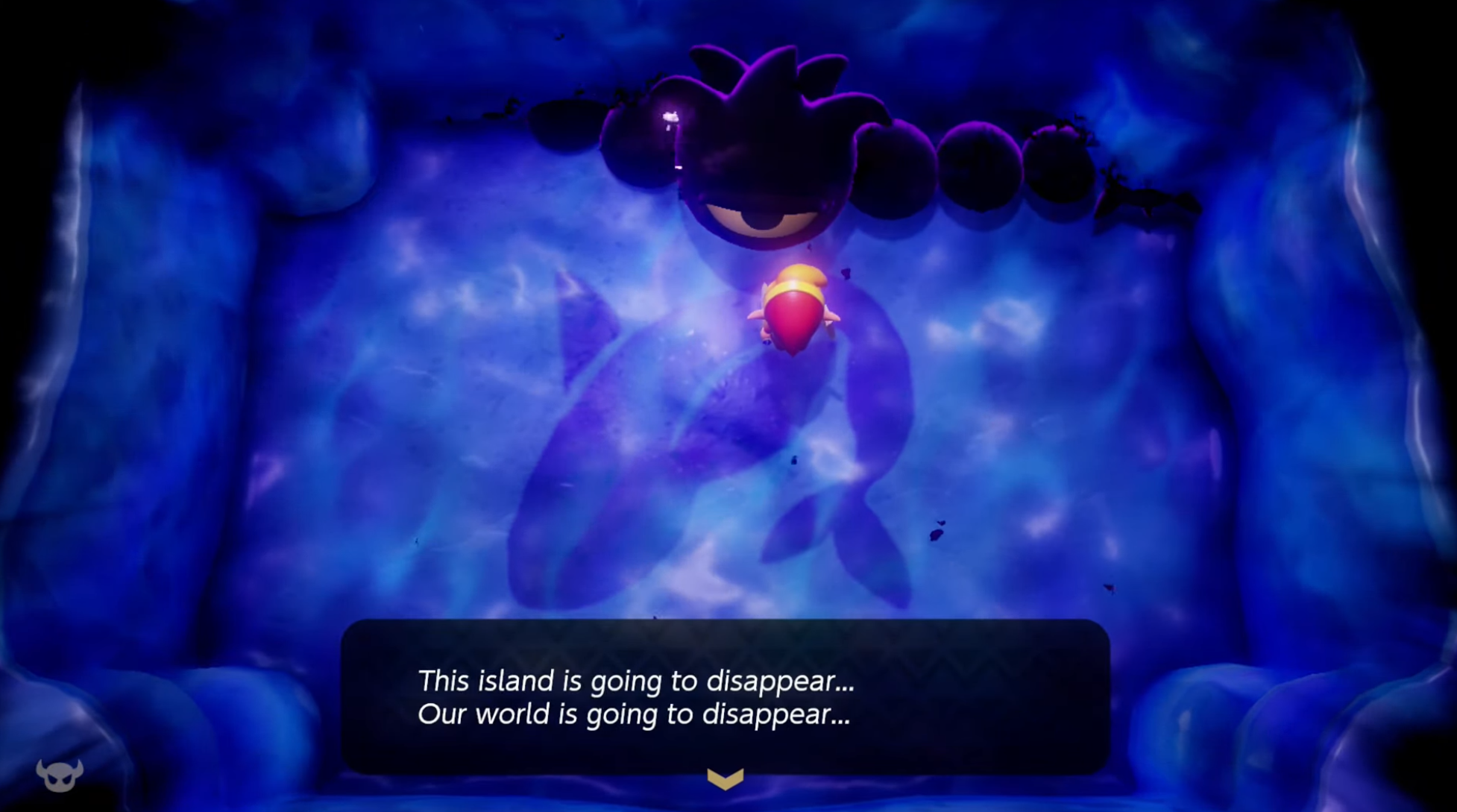
Ultimately though, it is the nature of Wind Fish’s dreams to end. As the Wind Fish says, dreams are fleeting. The perpetuation of the dream is a corruption of its nature caused by evil outside influences.
Avatars and Objects of Power; Parallels to Hyrule
It is not difficult to look at Koholint and see the superficial similarities to the Hyrule of A Link to the Past. It has a mountain range to the north, a castle in the center, a parallel to Lake Hylia, and characters that are uncanny versions of Hyruleans (Marin and Tarin). Koholint is meant to resemble Hyrule.
The series of events local to Koholint is also exactly the same thing that happens in Hyrule but with a different Demon controlling it. Instead of Ganon plaguing Hyrule, the Nightmare plagues Koholint. Hyrule has a Triforce, Koholint has the Instruments of the Siren. Both Hyrule and Koholint require the intervention of heroes to subvert an incoming perpetual darkness caused by the Demon controlling the realm.
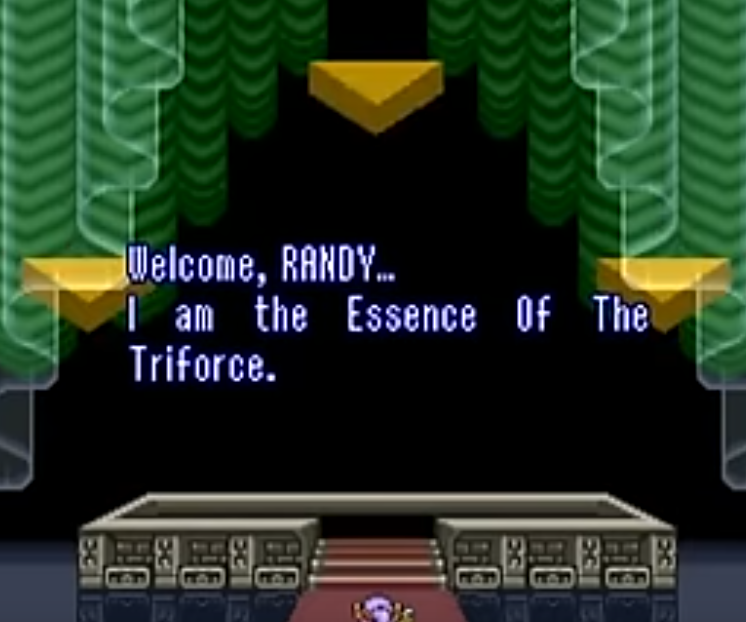
Hyrule even has what we could see as an avatar of the dreamer; a parallel to the Wind Fish’s owl: The Essence of the Triforce, especially in the depiction of A Link to the Past. Like the owl, the Essence of the Triforce is able to speak to Link and can only be described as avatars of their world’s gods.
Changing Landscapes
It’s a common point of discussion among Zelda fans to try and reconcile the maps of the different Zelda games into a comprehensible history of an evolving landscape. However, those discussions almost always end at an impasse because of inconsistencies or contradictions leading to having disagreements. One thing can be clearly observed between games though: Hyrule’s map changes constantly. You can imagine some games as having a natural development of the land between two points in history, but sometimes the features of particular iterations of Hyrule are too big to write off.
Notable examples are Four Swords Adventure’s Hyrule being an island compared to something like the larger landscape of Adventure of Link’s Hyrule. The Hyrule in Breath of the Wild notably has the Lost Woods and the Great Deku Tree in a completely different spot than its historical location. Big and small, you’ll find differences when comparing the general layout of the maps of the games.
There are a few ways to go about handling the map situation. You could say that the depiction of Hyrule in any particular game is more like a retelling of that world (it IS the Legend of Zelda) rather than a literal depiction of the world. You could also say that Hyrule doesn’t have to resemble the real world in how it changes and can radically change from game to game. You could ALSO say that Nintendo hasn’t thought about it that hard and the discrepancies are just plot holes.
However, you could also suppose that the reason some maps are so radically different than a previous game is that the Hyrules themselves are literally different landscapes.
The Maimais
In A Link Between Worlds, Link comes across Mother Maimai who informs him that her children have all gotten lost during their voyage “through all the worlds.”
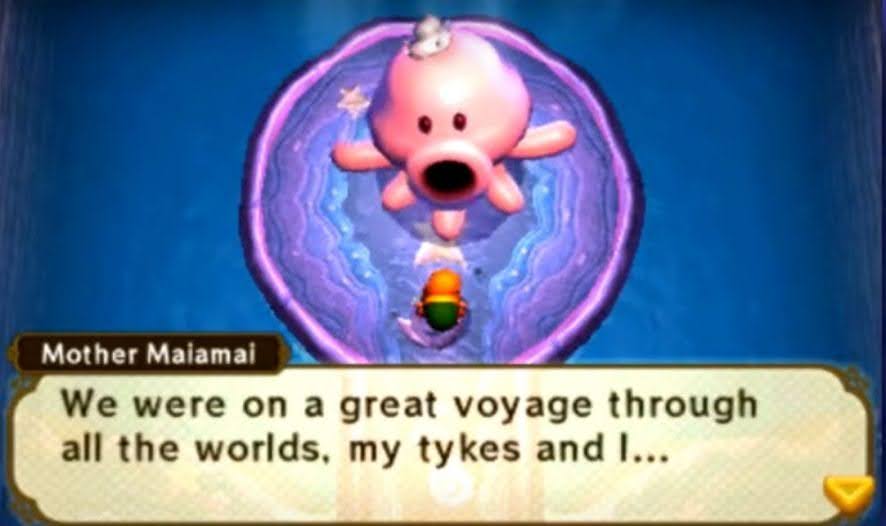
This game was somewhat unique in that it featured a parallel world to Hyrule called Lorule that seemed to exist entirely independently from Hyrule except once their Triforce was destroyed and the plot of the game was initiated. Combined with what we hear from Mother Maimai, it paints a picture of many worlds coexisting at the same time such that one could go on a trip like the Maimais and see various worlds.
We even know after the events of the game, the Maimais continue their journey with a single one staying behind to be independent.
"Hello there, Link! I'm the 72nd Maiamai you saved! Thanks for all your help. Mom and the others have gone off. But I—? Well, I stayed behind. Time for me to be my own Maiamai."
For the Maimais to be able to travel through many worlds, many worlds need to actually exist. In A Link Between Worlds, we are introduced to one extra "world" (Lorule). If you imagine that different timeline branches could be different worlds under this example, then you would have four total (three branches + Lorule). When Mother Maimai references traveling "through all the worlds," how many worlds is she referencing?
The Synthesis
I’ve talked a little bit about the parallels I see between Hyrule and Koholint, but let’s put aside for now whether or not you’re convinced so we can consider what this idea would look like:
Hyrule is a physical place that temporarily exists. Like Koholint, it had a beginning that started with the dream of an entity. While the entity sleeps, Hyrule exists with each dream being a new iteration of Hyrule.
Like the Wind Fish, the entity is plagued by evil forces who intend to hold the entity hostage by perpetuating the dream under their control. Like Koholint, Hyrule needs the help of a Hero to subdue the evil force and regain control of the dream for the entity.
Guided by the subconscious mind of the entity, the Hero uses special objects of power in order to fight back against the demonic threat.
And when the day is saved and evil is defeated, the dreamer can wake up and Hyrule can fade away until the next.
An Example
It would be impossible at this point in time to determine the particular ordering of Hyrules within this context, so I won’t try to claim any particular grouping or ordering. However, here is an example of a possibility:
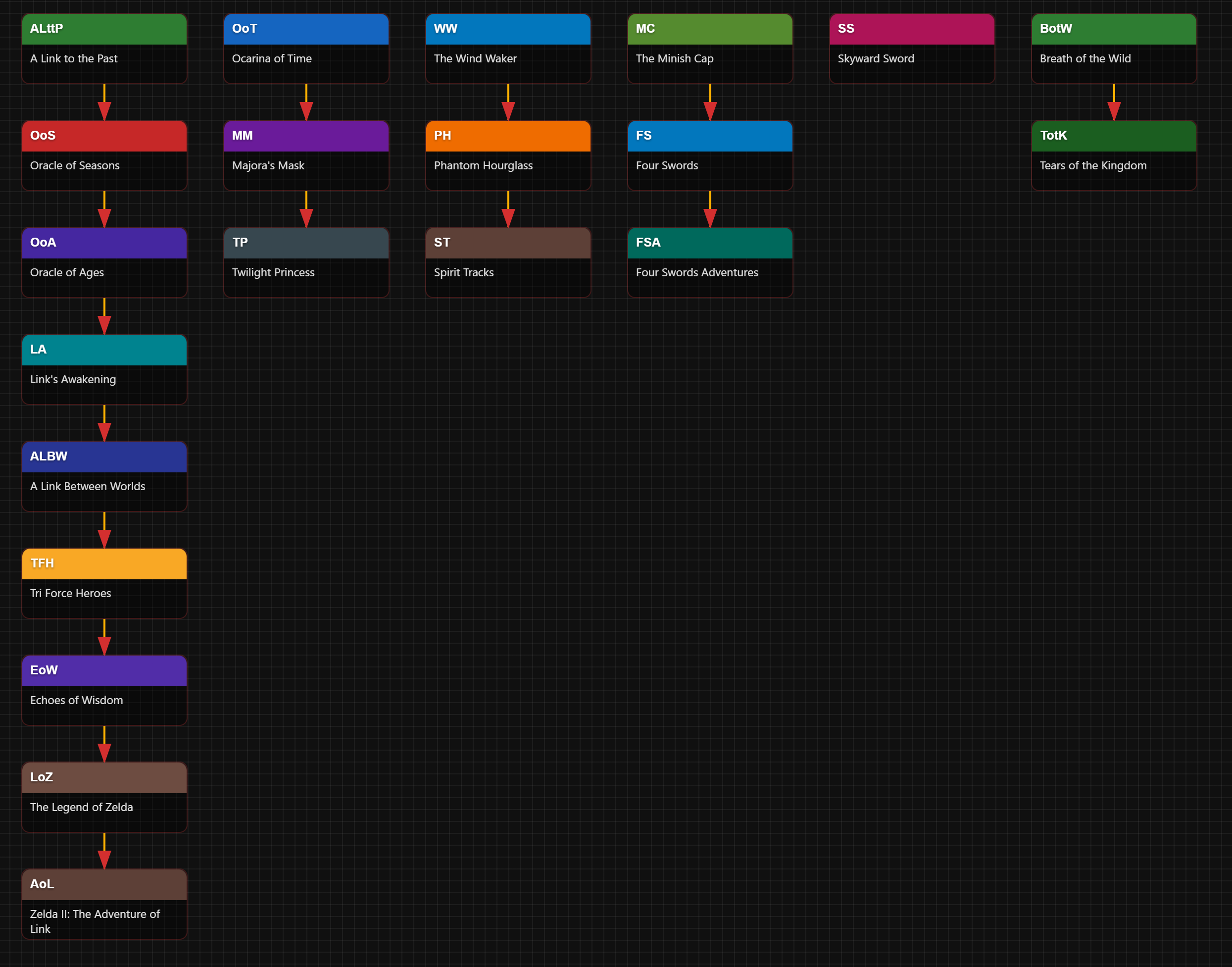
In this example, each Hyrule is separated by an instance of the Demon King (with some nuance of the Adult Timeline games).
The first timeline is contained with the non-Minish Cap 2D games and tells the continuous tale of this particular iteration of Ganon (the Downfall Timeline Ganon essentially).
A separate instance of Hyrule would then contain the events of Ocarina of Time and its associated games. I separate these into two timelines here but they could also be a single one with a split potentially. I think it works here as two different timelines if you imagine Wind Waker and its games being a new dream based on the previous iteration (a sequel dream).
Next, we have the Minish Cap-related games being in their own iteration of Hyrule. This timeline concludes with the defeat and sealing of FSA Ganon.
After that we have Skyward Sword as a self-contained dream. I depict it this way because its story is not explicitly and chronologically linked to something like Ocarina of Time in a way that games within other timelines’ groups fit together. For this reason, I think it is perfectly suitable that Skyward Sword is the only game in its iteration of Hyrule. You could put this before Ocarina of Time and I probably wouldn’t argue with you on it, though.
And last, we have Breath of the Wild and Tears of the Kingdom as its own iteration of Hyrule following the Ganondorf featured in those games.
In each of these timelines, you have the conditions for a self-contained dream like Koholint’s story. You have a dream we suppose to be Hyrule itself, avatars of the dreamer (Essence of the Triforce typically, but potentially also Kaepora Gaebora among others), “Nightmares” of the dream (demonic force, typically Ganon, but not always), and objects of power needed to purge the Nightmare and allow the dream to end (Triforce, Master Sword, Four Sword, Secret Stones, etc).
The order of each of these timelines is not what matters here; what is important is that each timeline fulfills a complete Koholint-like arc that would allow the dream to end and a new one to emerge.
Final Thoughts
Who is the dreaming entity?
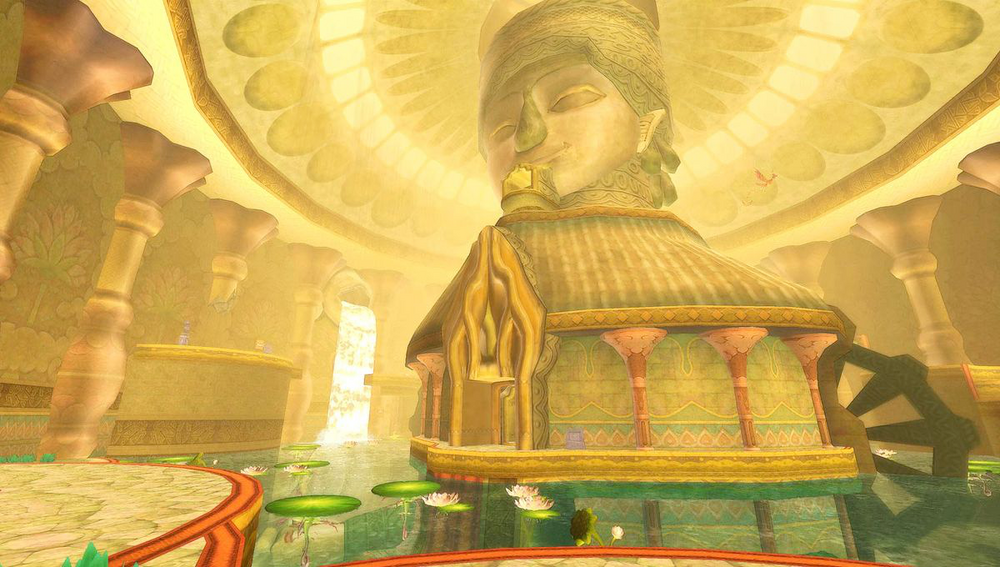
I don’t think this is a character that is fleshed out at this point, so this question probably has no answer. If I had to guess based on what I’ve seen in past games, I would say it’s Link. Or rather, it’s some character that the Link of all the games is sort of subconsciously inspired by. Link appears in every single game and has undergone many trials of purification of the mind, body, and spirit. Especially recently, themes of enlightenment and purification of the spirit have been used in the games and it wouldn’t surprise me if one day we find out Link is always a version of some REAL Link that is undergoing a kind of trial. Perhaps the dreamer is represented by the Buddha statue in the Ancient Cistern…
Doesn’t this just mean all the games are a dream and don’t matter?
Only if you’re a pessimist. This idea was inspired by playing the Remedy games Alan Wake 1, Alan Wake 2, and Control. The idea of this isn’t that the games don’t matter, but that they’re part of something different than one continuous stream of history. Each game is adding something to the entity that it didn’t have before, in the same way that you always have more experiences at the end of the day than you did the night before. These trials will mean something to the entity eventually.
Do ANY of the games actually take place in the same physical space as each other?
For example, the world of Ocarina of Time and The Wind Waker; do they take place in the same actual world or are they parts of two separate dreams?
To this, I would say either could be true. It could be the case that there truly are some direct sequels, or even that there have only been a small number of total dreams. Each game could be its own dream. It’s impossible to say what the actual layout of the dreams are, mostly because I don’t think this is the current developer intent. This is more of an idea for where to take the franchise in the future.